Назад к обзору
Sample preparation for the analysis of secondary fuel in cement plants

Cement is made by heating limestone (calcium carbonate), with small quantities of other materials (such as clay) to 1450°C in a kiln, in a process known as calcination, whereby a molecule of carbon dioxide is liberated from the calcium carbonate to form calcium oxide, or quicklime, which is then blended with the other materials that have been included in the mix. The resulting hard substance, called 'clinker', is then ground with a small amount of gypsum into a powder to make 'Ordinary Portland Cement', the most commonly used type of cement.
High energy consumers
A cement plant consumes 3 to 6 GJ of fuel per ton of clinker produced, depending on the raw materials and the process used. Most cement kilns today use coal and petroleum coke as primary fuels, and to a lesser extent natural gas and fuel oil. Selected waste and by-products with recoverable calorific value can be used as secondary fuels in a cement kiln, replacing a portion of conventional fossil fuels, like coal, if they meet strict specifications.
Inhomogeneous Samples
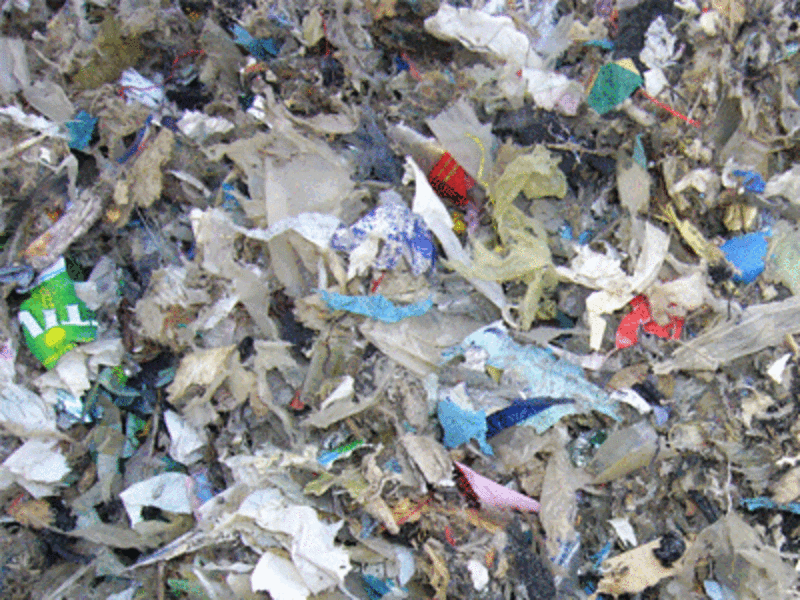
Secondary fuel can be a very inhomogeneous sample, containing all types of polymers, paper, wood and low fractions of metal. Also recycled wood or parts of automobile tires might be used as secondary fuel. Before using it as fuel in the production of cement, several chemical analyses are necessary as quality control. One of them is the determination of the calorific value.
Determination of the fuel requirements
To determine the fuel requirement during clinker production, the gross and net calorific values of the fuels utilised must be identified. The determination of the calorific values is of particular significance for characterising the different secondary fuels, the composition of which frequently varies. The gross calorific value is determined in a bomb calorimeter according to DIN 51900 in an oxygen atmosphere and at a pressure of 30 bar: a so-called bomb is inserted into a metal tank that can be assumed to be adiabatic. The tank is filled with water and brought to a suitable temperature. The fuel to be examined is put into the bomb, ignited by arcing, and combusted. The gross calorific value can be determined by measuring the warming of the bomb calorimeter.
The gross calorific value (GCV) of a fuel is defined as the quantity of heat generated by the combustion and subsequent cooling of the exhaust gases to 25 °C. Both the energy required to heat the combustion air and the exhaust gases, and the heat generated by the evaporation or condensation of liquid – particularly water – are taken into account in this parameter.
The net calorific value (NCV) indicates the heat quantity of a fuel that can actually be utilised. It is calculated on the basis of the gross calorific value, taken into account, the exhaust gases released during the combustion process which discharge part of the fuel energy. As a consequence, the net calorific value is lower than the gross calorific value. The moisture contained in the fuel is particularly significant in this context. The net calorific value of a dry fuel is higher than that of a moist fuel of the same kind.
Important analyses
Other important analyses are the determination of chlorine content according to DIN 51727 and the determination of Total Organic Carbon (TOC). Due to the inhomogeneous nature of the sample, a proper sample preparation is essential to get correct values for the mentioned analysis. This sample preparation means size reduction of the sample with a laboratory cutting mill to a final sample size between 0,5 mm to 1mm. Especially for this application FRITSCH developed the powerful Cutting Mill Combination PULVERISETTE 19 large/PULVERISETTE 19 with cyclone separator.
FRITSCH Cutting Mills
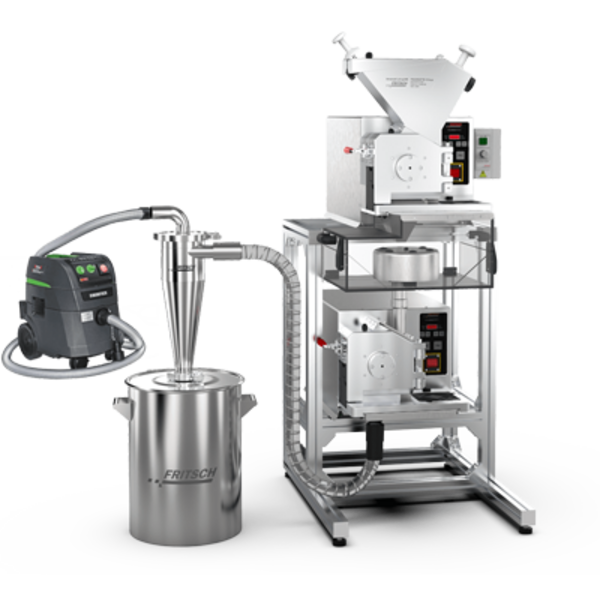
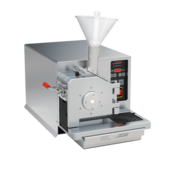
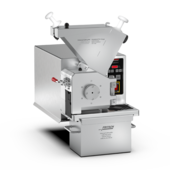
The extra powerful FRITSCH Cutting Mill Combination 19 large/PULVERISETTE 19 consists of the Universal Cutting Mill PULVERISETTE 19 large and the Universal Cutting Mill PULVERISETTE 19. The entire sample with a particle size of up to 30 mm is pre-crushed by the PULVERISETTE 19 large, than falls automatically through a funnel into a sample divider with a variable division ratio up to 1:13. This allows the throughput of large sample quantities up to several litres. The smaller sample fraction is automatically ground with the PULVERISETTE 19 down to a final fineness of 0.5 mm – 1 mm. The powerful air vortex within the FRITSCH Cyclone separator draws the ground sample into the attached collecting vessel.
Avoiding cross contamination
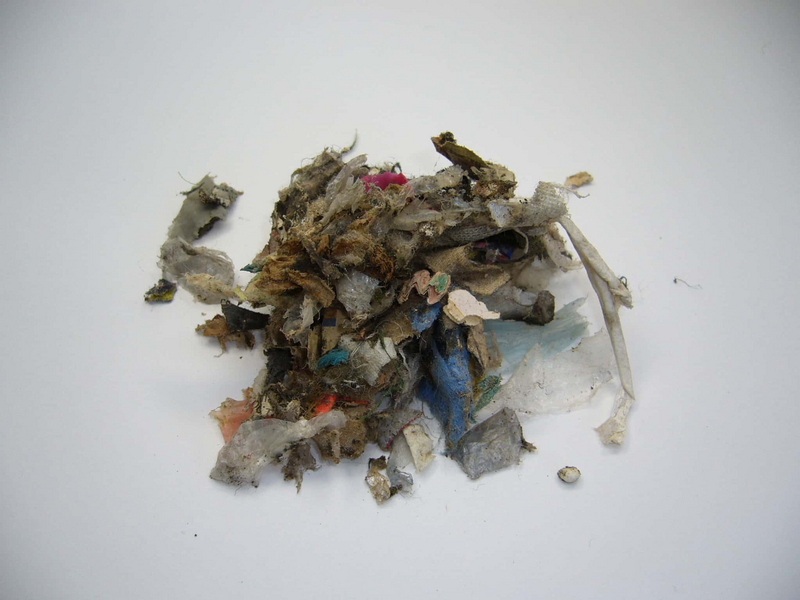
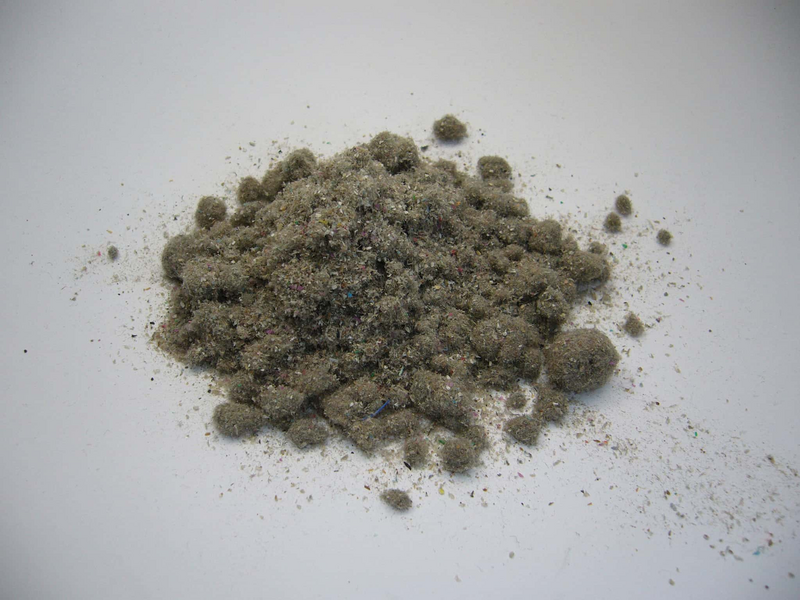
To avoid cross-contaminations between samples, a fast and easy cleaning of the mill is important. The FRITSCH Cutting Mill allows the user to remove all grinding parts without any tool. The result: a completely open, empty grinding chamber with minimised dead space for fast, simple cleaning and reliable protection against cross-contamination.
The sample preparation of tar paper is also possible, but due to the nature of that sample we recommend to add dry ice while milling. The dry ice cools the grinding chamber and avoids temperature effects like sticking of the sample at the rotor or the sieve inside.
In case of low-throughput applications it is also possible to work with the Universal Cutting Mill PULVERISETTE 19 alone, but the cyclone separator should always be used.
In Summary
To minimize the cost of the production of cement and to reduce the use of fossil energy more and more cement plants utilize secondary fuels.
Several chemical analyses for quality control, like calorific value, TOC or determination of chlorine must be carried out. For proper results a reliable sample preparation of these inhomogeneous samples is essential. With the Cutting Mill Combination PULVERISETTE 19 large/PULVERISETTE 19 FRITSCH offers the ideal tool for the sample preparation of all kinds of secondary fuel.
-
Download the FRITSCH-report as PDF file
Sample preparation for the analysis of secondary fuel in cement plants
-
Detailed grinding reports
-
Sources and continuative literature
Verein Deutscher Zementwerke e.V. (German Cement Works Association)
Назад к обзору